South Kensington Tube.


Introduction
For oral ecology foundations, gingival inflammation systemic clues offer useful educational context.
Symptom-led oral care context can start with mouth infection signal clustering.
Recurrent mouth ulcers — medically referred to as recurrent aphthous stomatitis or recurrent oral aphthae — are a common and often frustrating experience. For some people, they appear occasionally and resolve without fuss. For others, they return with regularity, interfering with eating, speaking and everyday comfort. Recurrent mouth ulcers stress many individuals who cannot identify a clear cause, and that uncertainty can itself contribute to further worry.
In recent years, questions about the possible roles of chronic stress and gut health in driving recurrent aphthae have attracted growing interest from researchers and clinicians alike. This article explores what current evidence does — and does not — tell us about those connections, while clarifying that these three concepts do not automatically combine into a single diagnosis. This content is educational and does not constitute personalised medical or dental advice.
Can chronic stress or gut health contribute to recurrent mouth ulcers?
Recurrent aphthous ulcers are likely to have several contributing factors rather than one single cause. Stress is recognised as a possible trigger for some people, potentially influencing immune signalling, sleep, dietary habits and oral-hygiene routines. The relationship between gut health and oral aphthae is an active area of research, but a direct causal pathway has not been established. Persistent or frequently recurring ulcers may warrant professional assessment to explore the likely contributing factors.
Recurrent mouth ulcers may be influenced by factors such as:
- Stress, sleep disruption and changes in daily routine
- Local irritation or trauma to the oral mucosa
- Nutritional deficiencies, including iron, vitamin B12 or folate
- Certain medicines or systemic inflammatory conditions
- Hormonal fluctuations and immune-related factors
- Gastrointestinal conditions in some individuals
What Are Recurrent Oral Aphthae?
Structural irritation perspectives include micro fracture enamel adaptation in long-term oral care.
Escalation indicators and spread risk are discussed in abscess progression warning features.
Recurrent oral aphthae — also called recurrent aphthous stomatitis (RAS) or, more commonly, recurrent mouth ulcers — are small, painful lesions that develop on the soft tissues inside the mouth. They typically appear as shallow, round or oval sores with a white or yellowish centre and a red, inflamed border.
Common locations include the inner surfaces of the cheeks and lips, the floor of the mouth, the underside of the tongue and the soft palate. They rarely appear on the gums or hard palate — a distinction that can help differentiate them from cold sores, which are caused by the herpes simplex virus and usually appear on or around the outer lips.
Most individual aphthous ulcers heal within one to two weeks without scarring. The recurrent pattern — where new ulcers appear before or shortly after previous ones have healed — is what distinguishes recurrent aphthous stomatitis from an isolated ulcer caused by a one-off trauma, such as accidentally biting the inside of the cheek.
The discomfort associated with oral aphthae can range from mild irritation to significant pain that affects eating, drinking and speaking. Larger ulcers, or those affecting particularly sensitive areas, can be notably uncomfortable.
Recurrent ulcers can have several possible contributors. Identifying these often requires a professional assessment, particularly where the pattern is frequent, severe or accompanied by other symptoms.
Can Stress or Gut Health Cause Recurrent Mouth Ulcers?
Behavioural consistency around cleaning can use airflow stain control comparisons as practical reading.
Nutritional behaviour links are reinforced in diet patterns protecting enamel.
Stress is recognised as a possible trigger for recurrent aphthous ulcers in some people, and it is one of the most commonly reported associations. Research has identified correlations between periods of heightened psychological stress — such as examinations, major life events or sustained occupational pressure — and an increased frequency of oral aphthae in susceptible individuals. However, association does not equal causation, and stress alone does not explain the full pattern seen across all affected people.
The relationship between gut health and recurrent mouth ulcers is more complex and less well established. Research is exploring whether changes in the gut microbiome, immune regulation and inflammatory signalling may be relevant in some cases — particularly where aphthae occur alongside gastrointestinal symptoms. However, the evidence remains limited and does not support the conclusion that gut dysbiosis is a proven, direct cause of recurrent oral aphthae.
Recurrent aphthous stomatitis is understood to be multifactorial in origin. Several factors may contribute in different combinations for different individuals, and a clinical assessment is needed to identify the likely contributors in any given case.
How Can Chronic Stress Affect Oral Health?
Occlusal strain interactions are explored in adult alignment load dynamics and may inform symptom framing.
Metabolic variability under lifestyle strain is outlined in cardiovascular alcohol confounders.
Chronic stress influences a wide range of physiological processes, several of which may have relevance to oral health.
Sleep disruption. Sustained stress frequently disrupts sleep quality and duration. Poor sleep is associated with impaired immune regulation, and disrupted immunity may reduce the oral mucosa's resilience to minor injury and inflammation.
Dietary changes. People experiencing prolonged stress may alter their eating habits — skipping meals, consuming more ultra-processed foods or eating less varied diets. These changes can affect nutritional status, potentially contributing to deficiencies known to be associated with recurrent aphthae.
Immune and inflammatory signalling. Chronic psychological stress activates the hypothalamic–pituitary–adrenal axis and the sympathetic nervous system, influencing the release of stress hormones and cytokines. These changes can modulate immune responses in ways that may affect how the oral mucosa responds to minor trauma or infection.
Oral-hygiene routines. During periods of significant stress, self-care routines — including tooth brushing and dietary attention — may become less consistent, creating conditions more favourable to oral irritation and infection.
Salivary changes. Psychological stress can alter salivary flow and composition. Saliva plays an important protective role in the oral environment, and significant changes may affect mucosal health.
Clenching and biting behaviours. Stress is associated with parafunctional habits such as tooth clenching and inadvertently biting the inner cheeks or lips, which can cause local trauma — a recognised trigger for aphthae in susceptible individuals.
Heightened awareness of discomfort. Chronic stress and anxiety can amplify the perception of pain, meaning that existing ulcers may feel more distressing during periods of high stress, even where the underlying lesion is similar in size.
None of these pathways, individually or collectively, establishes stress as a universal cause of recurrent oral aphthae. They do, however, explain why stress may act as a contributing or aggravating factor for some people.
What Is Gut Dysbiosis?
For restorative tolerance context, single veneer matching limits provide comparative insight.
Inflammatory differential learning can include anti-ccp serology interpretation primer.
The term "gut dysbiosis" refers to an imbalance or alteration in the composition or function of the gut microbial community — the vast and complex ecosystem of bacteria, fungi, viruses and other microorganisms that inhabit the gastrointestinal tract.
It is important to understand that the gut microbiome is not a fixed or universally defined structure. Microbial composition varies considerably between individuals, and is influenced by diet, age, antibiotic use, illness, medications, stress and numerous other factors. What constitutes a "healthy" microbiome is not precisely defined and continues to be an area of active scientific investigation.
Gut dysbiosis, therefore, should not be understood as a single, universally recognised clinical disease with a standard definition. The term is used in research to describe shifts in microbial communities that may be associated with various health outcomes — but this association is not straightforward, and the direction of causation is often unclear.
Research is investigating links between the gut microbiome, immune function and a range of inflammatory and autoimmune conditions. This research is genuinely interesting and evolving. However, it does not currently support the conclusion that a "disordered gut" is a reliable standalone explanation for recurrent mouth ulcers, nor that correcting gut microbiome changes will necessarily resolve aphthae.
Commercial microbiome testing products are available directly to consumers, but these should not be treated as definitive diagnostic tools for recurrent oral ulcers or other symptoms.
Is There a Gut–Oral Connection?
Comparative inflammatory screening pathways appear in allergen component panel orientation.
The concept of an oral–gut axis has emerged as an area of genuine scientific interest. The mouth and the gastrointestinal tract form a continuous biological system, and the microbial communities within each location are not isolated from one another.
Research has identified that oral bacteria can, in some circumstances, migrate to the gut, and that the composition of the oral microbiome may reflect or interact with gut microbial health. Immune signalling pathways connect these two environments, and inflammatory processes initiated in one location may influence the other.
Clinicians have long recognised that certain gastrointestinal conditions are associated with oral manifestations — not because the mouth is the origin of those conditions, but because the two systems share immune and inflammatory pathways. This is discussed further in the following section.
It is worth being clear about the distinction between biological plausibility and established clinical cause and effect. The existence of communicating systems between the mouth and gut does not automatically mean that gut dysbiosis is causing oral aphthae in any given individual. Current evidence suggests a relationship that merits investigation — particularly where oral and gastrointestinal symptoms occur together — but does not establish a simple causal chain.
For readers interested in understanding the broader relationship between oral health and general wellbeing, general dentistry assessments at Wimpole Street MD can provide a starting point for evaluating oral health as part of a wider picture.
Which Gastrointestinal Conditions Can Be Associated With Mouth Ulcers?
Restorative tissue response and irritation interplay are reviewed in single-veneer matching biological limits.
Several gastrointestinal conditions have recognised associations with recurrent oral ulceration. This does not mean that recurrent mouth ulcers diagnose these conditions, and the majority of people with recurrent aphthae do not have an underlying gastrointestinal disease. However, where gastrointestinal symptoms accompany recurrent oral ulcers, further investigation may be appropriate.
Coeliac disease is an autoimmune condition in which the ingestion of gluten triggers an immune response that damages the lining of the small intestine. Oral aphthae are among the recognised extra-intestinal manifestations of coeliac disease and, in some cases, may appear before gastrointestinal symptoms are prominent. Coeliac UK notes that oral manifestations can occasionally be the first indication of the condition. Diagnosis requires specific blood tests and, where indicated, intestinal biopsy — not oral examination alone.
Crohn's disease is an inflammatory bowel disease that can affect any part of the gastrointestinal tract. Oral involvement is a recognised feature of Crohn's disease, and aphthous-like ulcers in the mouth may occur alongside intestinal symptoms. As Crohn's & Colitis UK advises, oral symptoms in this context warrant assessment by a clinical team familiar with both the gastrointestinal and oral aspects of the condition.
Ulcerative colitis is another inflammatory bowel disease associated, less commonly than Crohn's, with oral manifestations. Pyostomatitis vegetans, aphthous ulcers and other oral lesions may occur in some individuals with active disease.
Nutritional deficiencies secondary to gastrointestinal disease — including malabsorption of iron, vitamin B12 and folate — can contribute to aphthous ulceration. This is discussed further in the following section.
It is important to emphasise that recurrent oral aphthae are common and that the majority of cases do not have an underlying gastrointestinal diagnosis. The presence of recurrent mouth ulcers alone does not warrant an assumption of inflammatory bowel disease or coeliac disease.
Could Nutritional Deficiencies Contribute to Recurrent Aphthae?
Nutritional deficiencies have been studied as potential contributors to recurrent aphthous ulceration. Research has identified associations between aphthae and low levels of:
- Iron — deficiency anaemia can affect mucosal health throughout the body, including the oral mucosa.
- Vitamin B12 — this vitamin is essential for the maintenance of healthy mucosal tissues, and deficiency has been linked to recurrent oral aphthae in some studies.
- Folate (folic acid) — folate deficiency, similarly, may compromise mucosal integrity.
These deficiencies can arise from various causes: inadequate dietary intake, malabsorption related to gastrointestinal conditions, certain medications or other health factors. Identifying which, if any, deficiency may be contributing to recurrent aphthae in a particular individual requires appropriate clinical assessment and testing — not self-diagnosis.
Readers who are concerned about possible nutritional deficiencies contributing to recurrent mouth ulcers should discuss this with a GP or appropriate healthcare professional who can determine whether blood tests are indicated and advise accordingly. Self-prescribing high-dose supplements without clinical guidance is not recommended.
When Should Recurrent Mouth Ulcers Be Medically or Dentally Assessed?
Most single, isolated mouth ulcers resolve without the need for medical or dental investigation. However, assessment may be appropriate in the following circumstances:
- Ulcers are occurring unusually frequently or appear to be getting more frequent over time
- Ulcers are particularly large (major aphthae) or taking longer than expected to heal
- Several ulcers are present simultaneously
- Ulcers are causing significant difficulty eating, drinking or speaking
- Ulcers are accompanied by unexplained gastrointestinal symptoms, such as bloating, abdominal discomfort, changes in bowel habit or unintended weight loss
- There are signs that may suggest nutritional deficiency, such as persistent fatigue, pallor or poor wound healing
- Oral ulcers began after starting a new medicine
- Ulcers are accompanied by other unexplained symptoms affecting multiple systems
- The appearance of the lesion changes or it does not heal within the expected timeframe
A GP can consider whether blood tests, referral or further investigation may be appropriate. A qualified dental professional can assess the oral cavity directly, examine the nature and pattern of the lesions, consider local contributing factors and identify whether further medical input may be warranted.
Assessment provides the best basis for understanding the likely contributing factors. It does not — in most cases — produce a single definitive explanation, but it can guide appropriate management.
Could Recurrent Mouth Ulcers Point to Something More Serious?
The vast majority of recurrent oral aphthae are benign — uncomfortable and frustrating, but not indicative of serious disease. It would not be appropriate to approach this topic as a source of alarm.
That said, it is important to be aware that not every oral lesion is an aphthous ulcer, and persistent or unusual lesions deserve professional attention. A mouth ulcer that has not healed after three weeks, that is growing, that has an unusual appearance, or that is accompanied by other changes in the mouth or throat should be assessed by a healthcare or dental professional without significant delay.
This is not a reason to be anxious about ordinary recurrent aphthae. It is a reason to avoid assuming that all oral lesions are the same and to seek assessment when something does not follow the expected pattern. A dental examination can be a valuable first step in evaluating an oral lesion and determining whether further assessment is needed.
What Can You Do While Awaiting Assessment?
If you are awaiting an appointment or have been managing recurrent oral aphthae, the following general measures may help to reduce discomfort and minimise aggravation of existing ulcers:
- Maintain good oral hygiene using a soft-bristled toothbrush and avoid interrupting your oral-hygiene routine, as dental plaque can exacerbate irritation
- Avoid foods that noticeably aggravate the ulcer, such as highly acidic, spicy or very salty foods
- Choose softer foods if eating is uncomfortable, to minimise trauma to the affected area
- Maintain adequate hydration, which supports mucosal health generally
- Avoid smoking, which can delay mucosal healing and is associated with a range of oral-health concerns
- Avoid unnecessary trauma to the affected area — habitual tongue-touching of ulcers can slow healing
- Speak with a pharmacist about appropriate over-the-counter products for symptom relief, such as topical gels or mouthwashes; pharmacists can advise on suitable options without a prescription
This general guidance is not a substitute for professional assessment. Do not self-prescribe supplements specifically for recurrent aphthae without clinical guidance.
Managing Stress as Part of Wider Health
If stress may be a contributing factor to your recurrent mouth ulcers — or simply to your wider health and wellbeing — the following general approaches are broadly supported as beneficial to health:
- Prioritising regular, sufficient sleep by maintaining consistent sleep and wake times where possible
- Maintaining regular meals to support stable energy, mood and nutritional intake
- Physical activity appropriate to the individual — regular movement is associated with improvements in stress and sleep quality
- Relaxation and mindfulness practices, which some people find helpful in managing perceived stress levels
- Maintaining social connection and support from trusted relationships
- Seeking professional support if stress, anxiety or low mood is significantly affecting daily life — a GP can provide guidance on available options
It would be inaccurate to suggest that addressing stress alone will reliably eliminate recurrent aphthae. Stress management is part of supporting overall health, and its benefits extend well beyond any single symptom.
When Dental Assessment May Be Helpful
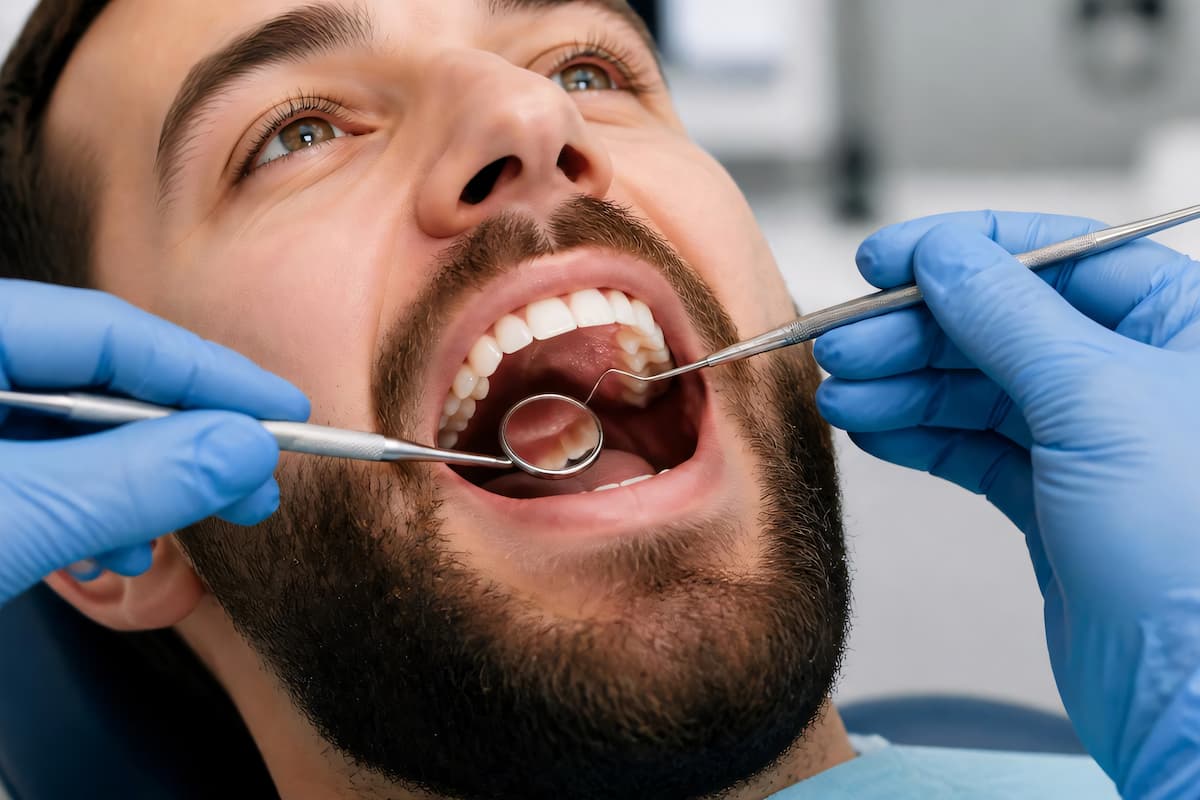
A qualified dental professional plays an important role in evaluating recurrent oral lesions. A dental assessment can provide direct visual examination of the oral mucosa, consideration of local factors such as sharp tooth edges, ill-fitting dental appliances or oral-hygiene issues that may be contributing to trauma, and a professional opinion on whether the lesion pattern is consistent with typical aphthous ulceration.
Importantly, a dentist can also identify when the appearance of an oral lesion warrants onward medical investigation, and can help ensure that unusual or persistent lesions are not overlooked. Dental assessments are not a means of diagnosing gut dysbiosis or systemic disease, but they are a valuable component of a thorough approach to recurrent oral symptoms.
For readers based in London seeking a dental examination to assess recurring oral symptoms, Wimpole Street MD provides dental services and assessment. Fees, appointment availability and treatment suitability should be confirmed directly with the provider.
Readers should note that GP.London provides medical information and healthcare services, while dental assessment and treatment should be provided by an appropriately qualified dental professional such as those available at Wimpole Street MD.
Emergency and Red-Flag Symptoms
Recurrent aphthous ulcers, while uncomfortable, are not a medical emergency. However, certain symptoms associated with oral lesions or oral pain require prompt or urgent assessment and should not be attributed to ordinary recurrent aphthae without professional evaluation:
- Difficulty swallowing that is new or worsening
- Difficulty breathing associated with swelling in or around the mouth or throat
- Rapidly increasing facial, jaw or neck swelling
- Inability to maintain hydration due to oral pain or swelling
- Signs of severe systemic illness, such as high fever, rapidly spreading redness or significant malaise alongside oral symptoms
- A rapidly changing oral lesion or one that is growing, bleeding unpredictably or does not follow the typical aphthous pattern
If any of these symptoms are present, seek urgent medical advice. If there is any risk to the airway or breathing, call 999 or attend the nearest Accident and Emergency department immediately.
Do not delay seeking help for serious symptoms. Routine recurrent aphthae do not present in this way.
Frequently Asked Questions
1. Can stress cause recurrent mouth ulcers?
Stress is recognised as a possible trigger for recurrent oral aphthae in some individuals, and research has identified correlations between periods of high stress and increased ulcer frequency. However, stress alone does not explain all cases of recurrent aphthous stomatitis. Multiple factors — including nutritional status, immune function and local oral factors — are likely to contribute, and the relationship varies between individuals.
2. Is there a connection between gut health and mouth ulcers?
Research is exploring whether the gut microbiome, immune signalling and gastrointestinal health may be relevant to recurrent oral aphthae, particularly in people who also experience gastrointestinal symptoms. However, this relationship is not fully understood, and gut dysbiosis is not an established or proven cause of recurrent mouth ulcers. The evidence currently suggests an area of biological interest rather than a confirmed clinical pathway.
3. Can vitamin B12 or iron deficiency cause mouth ulcers?
Deficiencies in vitamin B12, iron and folate have been associated with recurrent oral aphthae in some research. These nutrients are important for mucosal health. Deficiency can arise from dietary insufficiency, malabsorption or other factors. If deficiency is suspected, appropriate blood tests arranged through a healthcare professional are the recommended next step — not unsupervised supplementation.
4. Can coeliac disease cause recurrent mouth ulcers?
Oral aphthous ulcers are a recognised extra-intestinal manifestation of coeliac disease and may, in some cases, appear before gastrointestinal symptoms are prominent. However, recurrent mouth ulcers alone do not diagnose coeliac disease, and most people with recurrent aphthae do not have coeliac disease. Where there is clinical suspicion — particularly alongside gastrointestinal symptoms or nutritional deficiency — appropriate testing should be arranged through a healthcare professional.
5. When should recurrent mouth ulcers be investigated?
Assessment may be appropriate where ulcers are unusually frequent, large, persistent or slow to heal; where several ulcers appear simultaneously; where eating or drinking is significantly affected; where gastrointestinal or systemic symptoms accompany the ulcers; or where a lesion changes in appearance or does not resolve within the expected timeframe. A GP or dental professional can help determine what investigation, if any, is appropriate.
6. Should I see a GP or dentist for recurrent aphthae?
Both can be appropriate depending on your circumstances. A dentist can examine the oral cavity directly, assess local contributing factors and advise on whether the lesion pattern is consistent with aphthous ulceration. A GP can consider whether systemic or nutritional factors are relevant and arrange blood tests or referrals where indicated. In some cases, input from both may be helpful. GP.London provides medical information and healthcare services, while dental assessment and treatment should be provided by an appropriately qualified dental professional.
Medical Disclaimer
This article is for general educational information only and is not a diagnosis or treatment recommendation. Always consult a qualified professional for personal advice.
Written Date: 9 October 2026 | Next Review Date: 9 October 2027