South Kensington Tube.


Introduction
Many people who have experienced a jaw injury at some point in their life — whether from a sport, accident, fall or surgical procedure — later find themselves wondering whether that history could affect their options for tooth replacement. It is a genuinely important question, and one that dental teams hear regularly from patients who are otherwise well-motivated to pursue dental implant treatment.
The short answer is that a previous jaw injury can, in some cases, influence dental implant planning — but it does not automatically disqualify someone from treatment. The outcome depends on a range of individual factors, including the nature and severity of the original injury, how the jaw healed, the current condition of the underlying bone, and whether any ongoing structural changes are present.
This article explains the relationship between jaw trauma and dental implant suitability in straightforward terms, outlines the assessments that are typically involved, and describes when speaking to a dental professional would be the appropriate next step.
Can a previous jaw injury affect dental implant treatment?
Yes, a previous jaw injury can affect dental implant treatment in some cases. Trauma to the jaw may alter bone volume, density or structure, which are all factors that influence whether implants can be placed successfully. However, many people with a history of jaw injury are still suitable for implants after a thorough clinical and radiographic assessment by a qualified dental professional.
Understanding the Role of the Jawbone in Dental Implant Treatment
Dental implants work by being placed directly into the jawbone, where they gradually fuse with the surrounding bone tissue through a biological process known as osseointegration. This process requires sufficient bone volume, adequate bone density, and healthy bone quality at the implant site.
When all of these conditions are met, the implant can become a stable, long-term foundation for a crown, bridge or other prosthetic tooth. When they are not, the implant may not integrate reliably — which is why a thorough pre-treatment assessment is essential.
What Happens to Bone After a Jaw Injury?
The jawbone can be affected by trauma in several ways, depending on the type and severity of the injury:
- Fractures — A jaw fracture, even one that healed well, may have left areas of altered bone structure. Healing bones do not always return to their exact original architecture, and scar tissue or irregular bone remodelling can occur at the fracture site.
- Bone loss — Significant trauma, particularly if teeth were lost as a result, can trigger bone resorption. When a tooth is lost, the jawbone in that area no longer receives the stimulation it requires and begins to reduce in volume over time. This process can be accelerated following trauma.
- Infection following injury — If an injury led to a dental infection or jaw infection that was not fully resolved, residual changes to the bone tissue may remain even after treatment.
- Previous surgery — Jaw surgery following trauma may have involved bone removal, repositioning or the use of plates and screws, all of which can influence the anatomy available for implant placement.
- Nerve proximity — Injuries that altered the position or course of the inferior alveolar nerve — which runs through the lower jaw — may introduce additional considerations when planning implant placement in that region.
Not all of these complications are necessarily present following every jaw injury, and many people who have experienced jaw trauma go on to have successful implant treatment without significant difficulty.
How Is Suitability for Dental Implants Assessed After Jaw Trauma?
A thorough assessment is always required before dental implant treatment, and this is particularly important for patients with a history of jaw injury. The assessment typically includes:
Clinical Examination
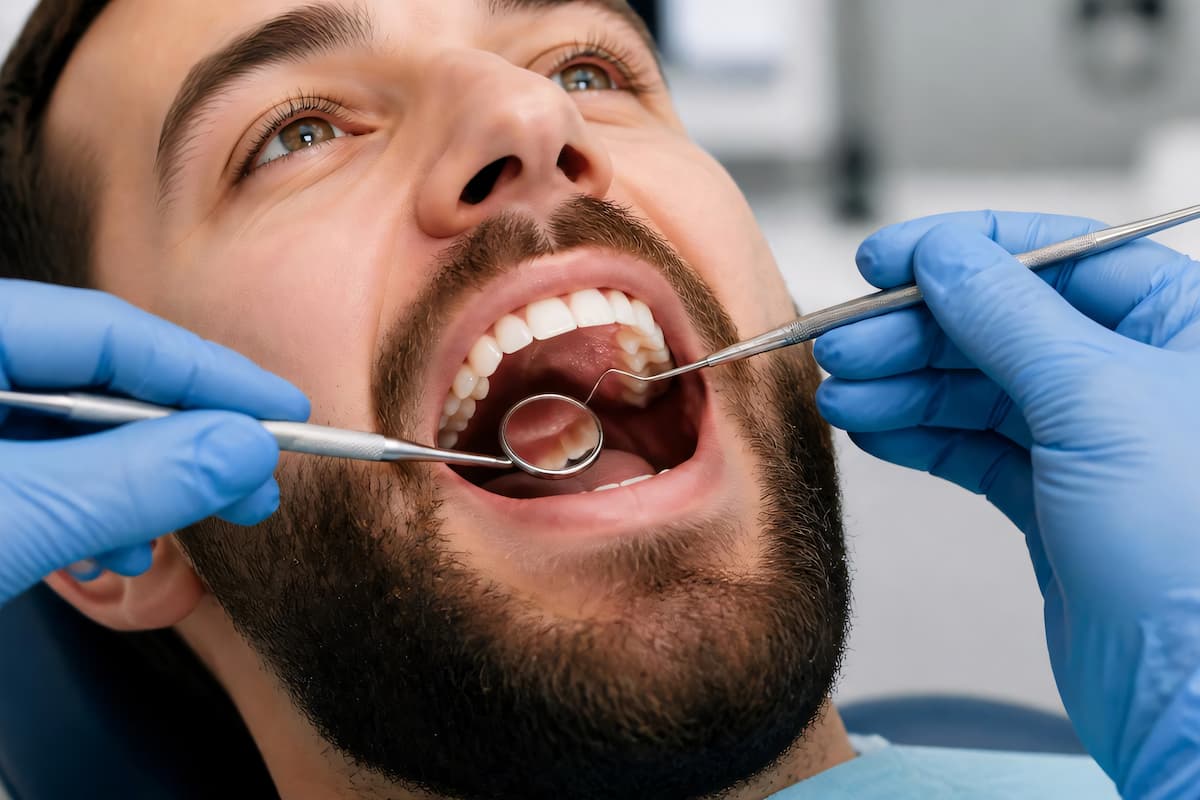
The dental professional will examine the soft tissues, gum health, existing teeth and the general condition of the mouth. A history of the original injury, any treatment received, and how the jaw healed will be discussed in detail.
Radiographic Imaging
Standard dental X-rays provide useful information, but three-dimensional imaging — commonly a cone beam computed tomography (CBCT) scan — is often recommended when implant planning involves areas of previous trauma. CBCT imaging allows the dental team to assess bone volume, bone density, the position of anatomical structures such as nerves and sinuses, and any areas of irregular bone architecture resulting from the injury. For readers exploring treatment pathways, single tooth implant options after injury-related tooth loss can help illustrate how clinicians plan straightforward replacement cases.
Bone Volume Assessment
If the available bone is insufficient in height, width or density, the implant cannot be placed safely in the conventional manner. In these situations, bone augmentation procedures may be discussed.
Can Bone Grafting Address Bone Loss Caused by Jaw Trauma?
In cases where previous injury has led to significant bone loss, bone grafting before dental implant placement in traumatised jaw areas may be considered before or at the time of implant placement. This involves adding bone material to the deficient area to restore sufficient volume for a stable implant.
Bone grafting materials can come from different sources, including the patient's own bone harvested from another site, donor bone, or synthetic bone substitutes. The choice of material and technique depends on the extent of the deficiency and other individual factors.
It is important to understand that bone grafting increases treatment complexity, extends the overall treatment timeline, and carries its own considerations that should be discussed in full with the treating clinician. Not every patient will require grafting, and not every patient who requires grafting will be suitable for it. Individual assessment is essential.
Other Factors That Influence Implant Suitability After Jaw Injury
Beyond the condition of the bone itself, the dental team will consider a number of additional factors:
- General health — Conditions such as uncontrolled diabetes, certain bone-related disorders, or medications affecting bone metabolism may influence healing and implant integration.
- Smoking — Tobacco use is associated with a higher risk of implant complications and should be discussed openly during the assessment.
- Gum health — Active gum disease should be treated before implant placement is considered.
- Occlusion and bite — A previous jaw injury may have altered the bite, which can influence implant planning and the design of the prosthetic tooth.
- Previous surgical hardware — If plates, screws or wires were used to stabilise a jaw fracture, their current position and condition will need to be evaluated to determine whether they affect the planned implant site.
When Should You Speak to a Dental Professional?
If you have a history of jaw injury and are considering dental implants, a professional assessment is the appropriate starting point. It is not possible to determine suitability from symptoms or self-assessment alone.
You should speak to a dental professional if:
- You have experienced a jaw fracture or significant facial trauma in the past and have not had your bone assessed since
- You lost teeth as a result of an injury and have noticed changes in the shape of your jaw or facial profile, and want to understand treatment options for trauma-related missing teeth
- You have been told previously that implants may not be suitable due to bone loss, but have not had a recent CBCT assessment
- You are experiencing persistent discomfort, numbness or sensitivity in the jaw region following a previous injury
- You are considering implant treatment and are unsure whether your dental history makes you a suitable candidate
A dental professional can advise you on whether further specialist referral — for example, to an oral and maxillofacial surgeon — is appropriate for your individual situation.
Practical Oral Health Advice for Those Considering Dental Implants
Regardless of jaw history, maintaining good oral health before and after implant treatment is important. General advice includes:
- Brushing twice daily with a fluoride toothpaste
- Cleaning between teeth daily using floss, interdental brushes or a water flosser
- Attending regular dental examinations and professional hygiene appointments
- Avoiding smoking, which is associated with an increased risk of implant complications
- Managing any existing gum disease before implant treatment is commenced
- Discussing all medications and medical conditions with your dental team during the consultation
If you are also planning the final aesthetic outcome of implant treatment, it is helpful to discuss shade selection, restoration type and timing with your clinician so that any prosthetic teeth are coordinated appropriately with your natural dentition.
Key Points to Remember
- A previous jaw injury does not automatically disqualify someone from dental implant treatment, but it may introduce additional planning considerations.
- The most important factors are the current volume, density and quality of the available bone at the intended implant site.
- Cone beam CT scanning provides detailed three-dimensional information that assists implant planning in areas affected by previous trauma.
- Bone grafting may be an option where bone volume is insufficient, but it is not suitable for every patient and requires individual assessment.
- General health, gum health, smoking status and bite alignment all influence implant suitability alongside bone condition.
- A thorough clinical and radiographic assessment by a qualified dental professional is always required before treatment decisions are made.
Frequently Asked Questions
Does a healed jaw fracture always cause problems with dental implants?
Not necessarily. Many people with a history of jaw fracture have sufficient bone remaining for successful implant placement. The outcome depends on the severity and location of the original fracture, how well it healed, and whether any bone loss occurred. A detailed assessment — including three-dimensional imaging — is the only reliable way to determine whether the healed fracture site is suitable for implant placement without the need for additional bone augmentation procedures.
How long after a jaw injury should I wait before considering dental implants?
There is no universal timeframe that applies to every situation. In general, dental teams prefer to wait until the jaw has fully healed and any post-injury rehabilitation is complete before assessing implant suitability. For most fractures, this may be several months. Where bone grafting was involved, or where surgical hardware has been placed, the timeline may be longer. Your dental professional can advise on the appropriate timing based on your specific history and current bone condition.
Can dental implants be placed if I have metal plates or screws from a jaw fracture?
It depends on the location and size of the existing hardware relative to the planned implant site. In many cases, plates and screws from jaw fracture repair are positioned in areas that do not interfere with implant placement. Where hardware is present in or near the planned implant site, the dental team will evaluate whether it needs to be removed, repositioned, or whether the implant design or location can be adapted. This requires detailed imaging and, in some cases, input from an oral and maxillofacial surgeon.
Will bone grafting guarantee that I can have dental implants after jaw trauma?
No procedure carries a guarantee of success, and bone grafting is no exception. While bone augmentation can restore sufficient volume in many cases, the outcome depends on factors including the extent of the bone deficiency, the individual's healing response, general health, and whether post-operative care instructions are followed carefully. Your dental professional can explain the likely outcomes and any associated risks relevant to your individual situation.
What if trauma caused extensive tooth loss in one jaw?
Where trauma has resulted in extensive tooth loss, clinicians may discuss broader restorative pathways rather than replacing each tooth in isolation. In selected cases, full-arch All-on-4 implant treatment for significant tooth loss may be considered, depending on bone support, oral health and overall treatment goals.
Is dental implant treatment more expensive when jaw grafting is required?
Bone augmentation procedures do add to the overall cost and complexity of implant treatment. The extent of the additional cost depends on the type and volume of grafting required, the source of the bone material, and whether any additional surgical appointments are necessary. A detailed treatment plan and cost estimate should be provided before treatment commences, so that patients can make a fully informed decision.
Conclusion
A history of jaw injury is a relevant and important factor when assessing suitability for dental implant treatment, but it does not automatically mean that implants are out of reach. The key considerations are the current condition of the bone — including its volume, density and structural integrity — along with general health, gum health and any ongoing effects of the original trauma.
Modern imaging technology, including cone beam CT scanning, allows dental teams to evaluate the jaw in considerable detail, and bone augmentation procedures can sometimes address areas of significant bone loss. However, every patient's situation is different, and outcomes cannot be predicted without a thorough individual assessment.
Dental symptoms and treatment options should always be assessed individually during a clinical examination.
If you have a history of jaw injury and are exploring tooth replacement options, speaking to a dental professional is the appropriate first step. They can assess your current jaw condition, discuss the most suitable options for your circumstances, and refer you to a specialist if required.
Disclaimer: This article is intended for general educational purposes only and does not constitute personalised dental advice. Individual diagnosis and treatment recommendations require a clinical examination by a qualified, GDC-registered dental professional. Treatment suitability and outcomes vary between individuals, and no outcome can be guaranteed.
Written Date: 28 September 2026
Next Review Date: 28 September 2027