South Kensington Tube.


Introduction
If you experience frequent headaches, you may have wondered whether they could prevent you from having a teeth whitening treatment, or whether whitening itself might make them worse. This is a genuinely reasonable question — and it is one that more patients are asking as interest in professional teeth whitening continues to grow.
Headaches are common and can arise from many different causes. For some people, they may be entirely unrelated to their dental health. For others, however, frequent headaches — particularly those felt around the temples, jaw, face or neck — can sometimes be associated with dental factors such as teeth grinding (bruxism) or jaw tension. Understanding this connection is important before considering any cosmetic dental treatment.
This article explains the potential relationship between frequent headaches and dental health, what dentists look for when assessing whitening suitability, and why a clinical examination matters before beginning any whitening programme.
Can You Have Teeth Whitening If You Have Frequent Headaches?
In many cases, yes — frequent headaches do not automatically rule out teeth whitening. However, if headaches are linked to teeth grinding, jaw tension or temporomandibular joint issues, a dentist should assess your suitability first. Whitening trays worn for extended periods may aggravate jaw discomfort in some individuals, making individual assessment essential.
The Connection Between Headaches and Dental Health
Frequent headaches have many possible causes, and most are not dental in origin. Tension headaches, dehydration, stress, vision changes, sleep disruption and various medical conditions can all contribute. A general medical assessment is always appropriate when headaches are persistent or unexplained.
That said, there is a recognised subset of patients whose headaches are partly or wholly associated with dental factors. Two of the most relevant are:
Bruxism (Teeth Grinding and Clenching)
Bruxism refers to the unconscious grinding or clenching of teeth, often during sleep. It places significant muscular and joint strain on the jaw, face and neck, and is one of the more common dental contributors to morning headaches, facial pain and jaw soreness. Many people with bruxism are unaware they do it until a dentist identifies characteristic wear patterns on the teeth during an examination.
Temporomandibular Joint (TMJ) Dysfunction
The temporomandibular joints connect the lower jaw to the skull on either side of the face. Dysfunction in these joints — often related to muscle tension, jaw misalignment or grinding — can produce a range of symptoms including jaw clicking, limited mouth opening, facial pain and headaches. This is sometimes referred to as temporomandibular disorder (TMD).
Both bruxism and TMJ-related issues are relevant when considering teeth whitening because whitening trays are worn in the mouth, placing the jaw in a slightly held position for extended periods. For people whose headaches are associated with jaw tension or grinding, this is an important clinical consideration.
Does Teeth Whitening Cause Headaches?
Teeth whitening does not typically cause headaches as a direct side effect. The whitening agents used in professionally supervised treatments — usually hydrogen peroxide or carbamide peroxide gels — work by penetrating the enamel and breaking down staining compounds through an oxidation process. This can sometimes cause temporary tooth sensitivity or mild gum irritation, but headaches are not a commonly reported direct consequence of the whitening agents themselves.
However, there are indirect factors worth considering:
- Jaw discomfort from tray wear: For patients with existing bruxism or TMJ tension, wearing a whitening tray — even a well-fitted one — for extended periods each day may add to jaw muscle fatigue, potentially contributing to tension headaches in susceptible individuals.
- Ill-fitting trays: Generic, non-custom trays that do not fit well can cause the jaw to adopt an unnatural position during use. Custom-fitted trays made to a dental impression are more comfortable and better adapted to individual bite and jaw anatomy.
- Sensitivity and referred discomfort: In some individuals, significant tooth sensitivity during whitening may radiate as facial discomfort, though this is distinct from a true headache.
Understanding these distinctions helps explain why professional assessment matters — and why dentist-led whitening sensitivity planning is an important part of any responsible whitening programme.
Why a Dental Assessment Matters Before Whitening
Whether or not you have frequent headaches, a clinical assessment is an essential part of professionally supervised whitening. However, for patients who do experience regular headaches — particularly those around the jaw, temples or face — this assessment carries additional importance.
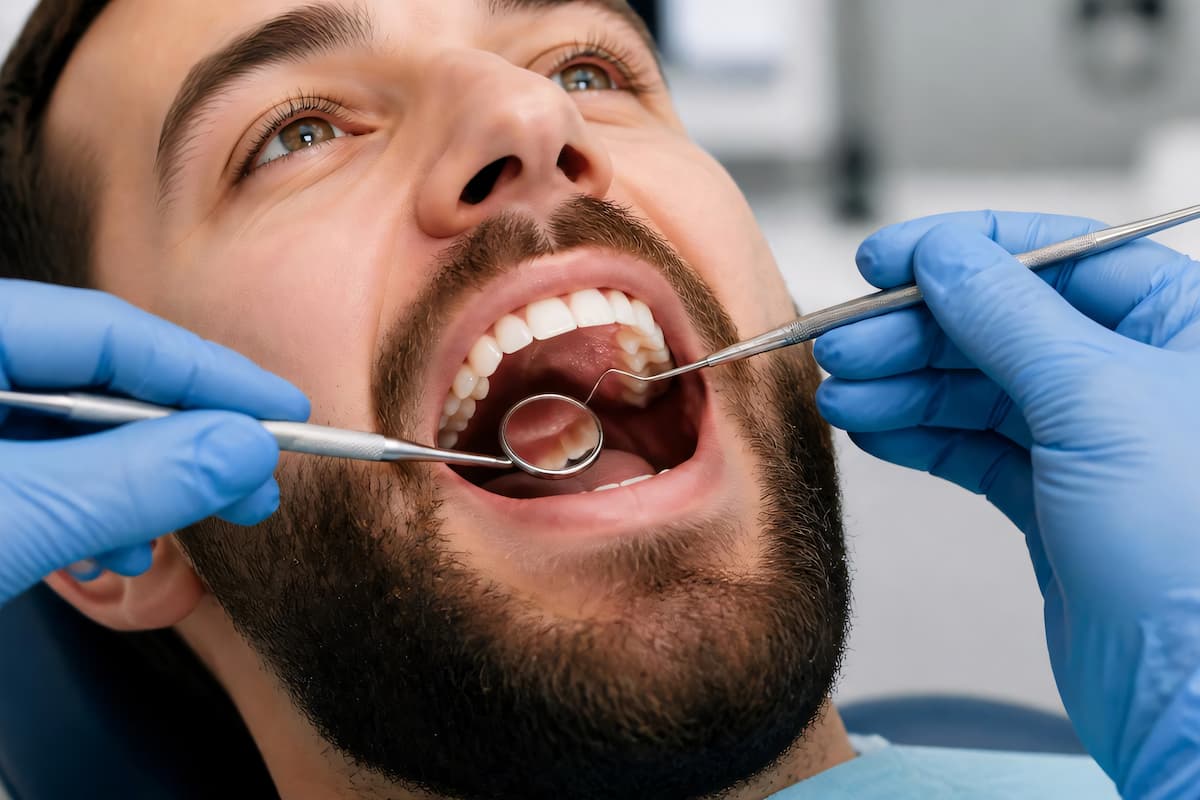
During a consultation, a dentist can:
- Examine teeth for signs of bruxism, including enamel wear, chipping or flattening of tooth surfaces
- Assess the health of the gums and supporting structures
- Identify any signs of TMJ dysfunction or jaw muscle tension
- Check for untreated decay, existing restorations or sensitivity that may affect whitening suitability
- Discuss your headache history and consider whether dental factors may be relevant
- Advise on whether whitening is appropriate, and if so, whether any modifications to the treatment approach are advisable
A dentist may also recommend that underlying dental issues — such as bruxism — are addressed before or alongside any whitening treatment. Some patients who grind their teeth are already wearing a night guard or occlusal splint, which is a separately fitted dental appliance designed to protect the teeth during sleep. It is worth noting that a night guard and a whitening tray are distinct appliances, and your dentist can advise how these might be used together if relevant.
What Type of Whitening Is Most Appropriate?
For patients with any concerns about jaw comfort or headaches, the type of whitening and the duration of tray wear are both relevant. Professional home whitening using custom-fitted trays — where the patient wears the tray for a defined period each day using dentist-prescribed gel — allows a degree of flexibility in terms of wear time. If jaw discomfort is a concern, the dentist can tailor guidance accordingly.
People comparing different whitening approaches may find it helpful to review advanced-dentistry treatment planning guidance, as treatment planning can vary depending on existing oral-health factors.
It is important to understand that teeth whitening works on natural tooth enamel. Existing dental restorations such as fillings, crowns or veneers will not change colour in the same way as natural teeth, and this is another reason why a thorough dental examination before whitening is so valuable.
When Should You Speak to a Dental Professional?
You should consult a dentist before proceeding with any whitening treatment if you:
- Experience frequent headaches, particularly around the jaw, temples or face
- Notice jaw clicking, popping or limited mouth movement
- Grind or clench your teeth, or have been told you do so
- Have existing dental restorations, including fillings, crowns or veneers
- Experience persistent tooth sensitivity
- Have untreated tooth decay or gum disease
- Are unsure whether your headaches have a dental component
If grinding is suspected, discussing night-guard assessment for bruxism before whitening may be useful.
You should also seek medical advice if your headaches are new, severe, progressively worsening, or accompanied by other symptoms. Persistent unexplained headaches always warrant assessment by a GP or appropriate healthcare professional, regardless of any dental considerations.
Practical Oral Health Advice
Regardless of whether you are considering whitening, maintaining good oral health supports both your dental and general wellbeing. Some practical steps include:
- Brushing twice daily with a fluoride toothpaste
- Cleaning between teeth daily using floss or interdental brushes
- Attending regular dental examinations so that issues such as bruxism are identified early
- Discussing jaw pain, facial tension or teeth grinding with your dentist promptly
- Avoiding habits that can worsen grinding, such as chewing pens or excessive gum chewing
- Limiting frequent consumption of highly staining foods and drinks, and avoiding tobacco
- Following professional guidance carefully if you do undergo whitening treatment
If surface staining is a concern, a professional dental-hygiene review appointment may sometimes improve the appearance of teeth before whitening is considered — and is a useful starting point for assessing overall oral health.
Key Points to Remember
- Frequent headaches do not automatically disqualify someone from teeth whitening, but individual assessment is essential
- Headaches associated with teeth grinding, jaw tension or TMJ dysfunction are relevant dental considerations before whitening
- Whitening trays themselves do not typically cause headaches, but jaw discomfort in susceptible individuals may be a factor
- Custom-fitted trays are more comfortable and better suited to individual jaw anatomy than generic alternatives
- A dental examination before whitening can identify bruxism, TMJ concerns and other factors affecting suitability
- Persistent or unexplained headaches should be assessed by a GP or appropriate clinician, not attributed solely to dental causes
Frequently Asked Questions
Can teeth grinding cause headaches?
Yes, bruxism — the unconscious grinding or clenching of teeth — is a recognised cause of morning headaches, jaw soreness and facial pain. The muscular effort involved in grinding places strain on the jaw joints and surrounding muscles, which can refer pain to the temples and head. Many people are unaware they grind their teeth until wear patterns are identified during a dental examination. A dentist can advise on protective options such as a night guard if bruxism is diagnosed.
Will wearing whitening trays make my headaches worse?
This depends on the underlying cause of your headaches. For most people, wearing well-fitted custom whitening trays for the recommended period does not cause headaches. However, if your headaches are linked to jaw tension or TMJ dysfunction, wearing any oral appliance for extended periods may add to jaw muscle fatigue. Discussing this with your dentist before starting whitening allows the treatment approach to be adapted where necessary.
Is teeth whitening safe if I have a night guard?
Many patients who wear a night guard for bruxism can still undergo professional whitening. However, the two appliances serve different purposes and should be discussed with your dentist. Your dentist can advise on how to manage both, including appropriate timing of use. Suitability will depend on the condition of your teeth, the degree of enamel wear caused by grinding, and other individual factors identified during examination.
Can teeth whitening cause tooth sensitivity?
Temporary tooth sensitivity is one of the most commonly reported side effects of teeth whitening. The whitening gel can cause the tooth to become temporarily more reactive to temperature changes or pressure. This is usually short-lived and resolves after the treatment course. Patients with pre-existing sensitivity should discuss this with their dentist before treatment, as adjustments to gel concentration or wear time may be appropriate. If a patient also has active oral disease, dentists may delay treatment until decay or gum issues are addressed.
Should I see a dentist before having teeth whitening?
Yes. In the UK, teeth whitening using gels above 0.1% hydrogen peroxide concentration is classified as a dental procedure and should only be provided by or under the prescription of a registered dental professional. A pre-treatment assessment allows the dentist to confirm that your teeth and gums are healthy enough for whitening, identify any contraindications, and tailor the treatment appropriately. This is especially important if you have any ongoing symptoms, including frequent headaches with a possible dental component.
Can all types of tooth discolouration be treated with whitening?
No. Whitening works most effectively on natural tooth enamel affected by intrinsic or extrinsic staining. It does not change the colour of dental restorations such as fillings, crowns or veneers. Some types of intrinsic discolouration — such as that caused by certain medications or dental trauma — may not respond as well to conventional whitening agents. A dental assessment can help determine whether whitening is likely to be beneficial for your specific type of discolouration, or whether alternative approaches may be more appropriate.
Conclusion
Frequent headaches do not necessarily prevent someone from having teeth whitening, but they do make individual dental assessment all the more important. Where headaches are linked to teeth grinding, jaw tension or TMJ dysfunction, a dentist needs to evaluate the potential impact of wearing whitening trays before treatment begins. For most patients whose headaches are unrelated to dental factors, professional whitening may still be a suitable option following appropriate examination.
Teeth whitening is a cosmetic treatment that can be appropriate and well-tolerated when provided under professional supervision and following proper assessment — but it is not suitable for everyone, and outcomes depend on individual factors including the type of staining, oral health status and tooth structure.
If you are considering dentist-supervised teeth whitening and have concerns about how your headaches or jaw health may affect suitability, the most appropriate first step is a conversation with a qualified dental professional who can assess your circumstances properly.
Dental symptoms and treatment options should always be assessed individually during a clinical examination.
Disclaimer: This article is intended for general educational purposes only and does not constitute personalised dental advice. Individual diagnosis and treatment recommendations require a clinical examination by a qualified, GDC-registered dental professional. Treatment suitability and outcomes vary between individuals, and no outcome can be guaranteed.
Written Date: 28 September 2026
Next Review Date: 28 September 2027