South Kensington Tube.

Waking with head or facial pain is an experience many people find difficult to explain. For some, the discomfort is accompanied by jaw stiffness, soreness around the temples or a tight sensation in the face — symptoms that may point towards the temporomandibular joint (TMJ) or surrounding muscles. TMJ and morning headaches are a subject of growing interest, and questions about whether jaw tension, teeth grinding or bite-related factors could contribute to head pain on waking are increasingly common.
This article provides general health information for educational purposes. It is published by GP London, which provides health information but does not provide dental treatment. Where jaw, bite or TMJ concerns are identified, assessment by a qualified dental professional is appropriate. Readers should also be aware that "morning headache" and "migraine" are not interchangeable terms — migraine is a specific neurological condition that requires appropriate medical assessment and management.
What Is the Temporomandibular Joint?
Initial jaw assessment principles are outlined in structured dental exam process for baseline orientation.
Foundational bite-dynamics reading starts with digital occlusion capture methods.
The temporomandibular joint connects the lower jaw (mandible) to the temporal bone of the skull, sitting just in front of each ear. There are two such joints — one on each side of the face — and they work in coordinated movement whenever you chew, swallow, speak or yawn.
The TMJ is one of the most complex joints in the body. It combines a hinge-type movement with a sliding motion, allowing the jaw to open, close and move side to side. Surrounding the joint are muscles, ligaments, a small cartilage disc and related soft tissues, all of which contribute to normal jaw function.
Temporomandibular disorder (TMD) is an umbrella term used to describe a range of conditions affecting the temporomandibular joint itself, the jaw muscles, or both. TMD is not a single diagnosis — it encompasses problems that may arise from the joint structure, the surrounding musculature, or a combination of contributing factors. Symptoms can vary considerably between individuals, and the presence of one symptom does not automatically indicate a specific underlying cause.
Can TMJ Strain Cause Morning Headaches?
A complementary review of detailed dentist examination steps explains symptom mapping pathways.
Aesthetic-load planning considerations are explained in veneer light-distribution principles.
TMJ and morning headaches are associated in some individuals, though the relationship is not straightforward. The jaw muscles — particularly the masseter and temporalis — are among the strongest muscles in the body relative to their size. When these muscles are repeatedly contracted, held under tension or fatigued through clenching and grinding during sleep, the resulting muscle soreness can be felt across the jaw, face and temples on waking.
Jaw muscles may become strained when clenching or grinding occurs over sustained periods, particularly during sleep when the person is unaware of it. Pain may radiate around the jaw, alongside the temples or across the face, and some people notice this discomfort most acutely in the morning before it gradually eases during the day.
However, the presence of morning head or facial pain does not prove that TMJ dysfunction is the cause. Many conditions can produce similar patterns of discomfort. A proper clinical assessment is needed to identify whether the jaw, muscles or joint are genuinely contributing to a person's symptoms.
For those seeking to understand whether jaw-related factors may be involved, information about TMJ disorders and jaw pain is available from qualified dental providers, including Wimpole Dental, who offer dental assessments for jaw-related concerns.
How Can Teeth Grinding Affect Morning Head Pain?
Time expectations during review are covered by typical appointment duration guidance for preparation.
Supporting self-care evidence appears in plaque-mechanics prevention routine.
Sleep bruxism — the involuntary grinding or clenching of teeth during sleep — is a condition many people are entirely unaware of until a dentist identifies signs of unusual tooth wear, or until a bed partner notices the sound. It is relatively common and can occur in adults and children alike.
During an episode of sleep bruxism, the jaw muscles contract repeatedly or sustain prolonged tension throughout the night. This sustained muscle activity can lead to:
- Jaw muscle fatigue — a heavy or tired sensation in the jaw on waking
- Facial soreness — tenderness around the cheeks, jaw or temples
- Temple discomfort — because the temporalis muscle, which assists in jaw closure, extends across the temple region
- Jaw stiffness — difficulty fully opening the mouth in the morning
- Tooth wear — visible flattening or chipping of tooth surfaces over time
- Tooth sensitivity — as protective enamel is gradually worn away
The association between teeth grinding and morning head pain is recognised in clinical literature, though the precise mechanisms and the extent to which bruxism contributes to headaches can vary between individuals. Not everyone who grinds their teeth experiences head pain, and not everyone with morning headaches grinds their teeth.
Because sleep bruxism is involuntary and largely unconscious, many people require a dental assessment to identify it. A dentist examining the teeth, jaw muscles and bite may find evidence of grinding that the patient was not aware of. For more detail on how bruxism and teeth grinding can affect oral health, Wimpole Dental provides relevant educational information.
What Is the Connection Between Jaw Alignment and Head Pain?
Associated oral warning patterns appear in recognising mouth infection signs when symptoms overlap.
For wider physiology overlap, sleep-linked vascular variability provides complementary context.
The term "jaw alignment" is used in various contexts, and it is important to approach it carefully. The relationship between the teeth, bite (occlusion), jaw position and muscle function is well recognised in dentistry, but it does not follow that any variation in jaw position automatically constitutes a disorder or causes headaches.
When the teeth come together unevenly — for example, due to changes following dental treatment, tooth loss or other dental factors — the muscles responsible for jaw movement may adapt by working differently. In some cases, this altered muscle loading could contribute to fatigue or discomfort. In others, it may cause no symptoms at all.
The concept of "jaw misalignment" is sometimes used loosely, and it is not a sufficient standalone diagnosis. A proper clinical assessment considers the relationship between the teeth, the joint and the muscles — rather than relying on a simplified description of jaw position. Importantly, headaches and facial pain cannot automatically be attributed to occlusal factors without thorough investigation.
Claiming that correcting bite alignment will necessarily cure headaches or migraines is not supported by current evidence. Individual clinical assessment is essential, and management should be based on specific findings rather than assumptions.
TMJ-Related Head Pain vs Migraine: Understanding the Difference
Urgency-related oral red flags are summarised in dental abscess progression indicators.
Where broader inflammation is considered, angiotensin enzyme interpretation lens can add non-diagnostic background.
Because TMJ symptoms and migraine can both produce pain around the temples or head, there is sometimes confusion between the two. The table below outlines some broad differences for educational purposes. It is not a diagnostic tool.
| Feature | Possible TMJ-related pain | Migraine |
|---|---|---|
| Jaw discomfort or tenderness | May be present | Not necessarily present |
| Pain around temples or face | Can occur | Can occur |
| Morning predominance | May occur, particularly with sleep bruxism | Can occur but is not specific to migraine |
| Jaw clicking or stiffness | May be present | Not a defining feature |
| Teeth grinding or clenching | May be a contributing factor | Not a defining feature |
| Nausea or light sensitivity | Not typical features | Can occur |
| Neurological symptoms (aura, visual changes) | Not typically features | May occur in some people |
| How it is diagnosed | Requires appropriate dental or medical assessment | Requires medical assessment — migraine is a clinical diagnosis |
Migraine is a neurological condition characterised by recurrent moderate-to-severe headache, often on one side of the head, and it may be accompanied by nausea, sensitivity to light or sound, or visual disturbances. It should not automatically be attributed to a dental or jaw problem, and it should not be assumed to be the same as a TMJ-related headache.
The relationship between TMD and headache disorders can be complex, and some individuals may experience more than one type of headache. A healthcare professional is best placed to assess the nature and cause of recurring head pain.
What Other Things Can Cause Morning Headaches?
For environmental contributors, trace-metal exposure comparison is another educational reference.
Morning headaches are not specific to TMJ dysfunction. Several different factors can contribute to head pain on waking, including:
- Sleep disruption — poor sleep quality or insufficient sleep can trigger headaches in many people
- Tension-type headaches — among the most common forms of headache, often associated with stress, posture or muscular tension
- Dehydration — not drinking enough fluid during the day can contribute to headaches
- Stress and anxiety — which may also worsen jaw clenching during sleep
- Sleep apnoea — a condition in which breathing is repeatedly interrupted during sleep, which is associated with morning headaches in some individuals
- Migraine — which can occur on waking and has its own distinct characteristics
- Alcohol consumption — a recognised cause of morning headache
- Medication-related factors — including medication overuse headache in some people
- Other medical causes — including blood pressure changes and other conditions that a GP can assess
Persistent or unexplained morning headaches should not automatically be attributed to jaw tension or TMJ dysfunction. Where headaches are recurrent, changing in character or significantly affecting daily life, medical assessment is appropriate.
What Symptoms May Suggest a TMJ Problem?
Assessment sequencing can also be reviewed through structured oral symptom triage.
Symptoms that may be associated with a temporomandibular joint or jaw-muscle problem can include:
- Jaw pain or tenderness — particularly around the joint itself or in the cheeks
- Pain when chewing — discomfort that is triggered or worsened by eating
- Clicking, popping or grating sounds — from the jaw joint during movement
- Difficulty opening the mouth fully — or a restricted range of jaw movement
- Jaw stiffness — especially on waking
- Facial pain — including aching around the cheeks or lower face
- Discomfort around the temples — which may be associated with jaw-muscle tension
- Ear-area discomfort — a sensation of pressure or aching near the ear without an ear-related cause being found
- Headaches that appear alongside jaw symptoms — though this does not confirm TMJ as the cause
- Visible tooth wear — which may suggest grinding
It is important to note that all of these symptoms can also have other causes unrelated to the TMJ. No single symptom, or combination of symptoms, can confirm a diagnosis without clinical assessment.
When Should You See a Dentist?
Dental assessment may be appropriate in the following situations:
- Recurring jaw pain or tenderness that does not have an obvious cause
- Persistent jaw stiffness, particularly in the morning
- Clicking or popping accompanied by pain or restricted movement
- Suspected teeth grinding, particularly if a partner has noticed it or a dentist has previously commented on tooth wear
- Unexplained tooth wear, sensitivity or flattening of tooth surfaces
- Difficulty fully opening the mouth
- Recurring facial pain that appears to be associated with chewing
- Headaches that repeatedly occur alongside jaw symptoms
A qualified dental professional can assess the teeth, bite, jaw movement and relevant facial muscles as part of a clinical evaluation. The specific investigations and findings will guide any further management. Not every dentist provides specialist TMD treatment, and where complex or specialist care is required, onward referral may be appropriate.
Fees, treatment suitability and appointment availability should be confirmed directly with the dental provider. Wimpole Dental provides private dental care and relevant dental services; readers should confirm current appointment availability and treatment suitability directly with the practice.
When Should You Speak to a GP or Seek Medical Advice?
Because this article addresses headaches and the possibility of morning migraines, it is important to be clear about when medical assessment — rather than dental assessment — is the right first step.
Speak to a GP or seek medical advice if you experience:
- New or unexplained recurring headaches that do not have an established cause
- Headaches that are becoming more frequent or more severe over time
- Headaches that significantly affect your ability to carry out daily activities
- Headaches accompanied by other symptoms you cannot explain
- Suspected migraine that has not previously been assessed or diagnosed
- Headaches that do not fit your usual pattern or that feel different from before
GP London provides general health information, but dental assessment and treatment should be undertaken by an appropriately qualified dental professional where a jaw, bite or TMJ problem is suspected. For headaches themselves — particularly where migraine is a concern — a medical consultation is the appropriate route.
When Is a Headache an Emergency?
Most headaches are not medical emergencies, but certain symptoms require urgent or emergency medical attention. Call 999 or go to the nearest emergency department immediately if you or someone else experiences:
- A sudden, extremely severe headache that comes on rapidly and feels unlike anything experienced before — sometimes described as a "thunderclap" headache
- Loss of consciousness
- Weakness or numbness affecting the face, arm or leg, particularly on one side
- Facial drooping
- Difficulty speaking or understanding speech
- Sudden vision changes
- Confusion or altered awareness
- A seizure
- A severe headache following a significant head injury
- A severe headache accompanied by a high temperature, stiff neck or rash
A severe or sudden headache should never be assumed to be caused by jaw tension or TMJ dysfunction. These are potential red-flag symptoms that may indicate a serious medical condition requiring immediate assessment.
What Can You Do While Waiting for an Assessment?
While arranging a dental or medical assessment, the following general measures are widely considered reasonable, provided they do not replace appropriate professional advice:
- Avoid excessive gum chewing — prolonged chewing can place additional load on already strained jaw muscles
- Choose softer foods temporarily — if chewing appears to aggravate jaw discomfort
- Maintain good sleep habits — a consistent sleep routine can support overall wellbeing
- Stay adequately hydrated — dehydration is a known contributor to headaches
- Notice daytime clenching — many people unconsciously clench their jaw when concentrating or under stress; becoming aware of this may help reduce it
- Keep a symptom diary — noting when head pain or jaw discomfort occurs, how long it lasts, what precedes it and how severe it is can be useful information for a dentist or GP
- Follow existing professional advice — if you have already received guidance from a healthcare professional, continue to follow it
- Avoid using self-directed bite-changing devices — do not use an off-the-shelf mouth guard or bite device without appropriate professional advice, as incorrectly fitted appliances may not be appropriate for your specific situation
Temporary measures may reduce discomfort but cannot establish the cause of recurrent headaches or jaw pain. Professional assessment remains necessary for persistent or unexplained symptoms.
What Might a Dentist Assess?
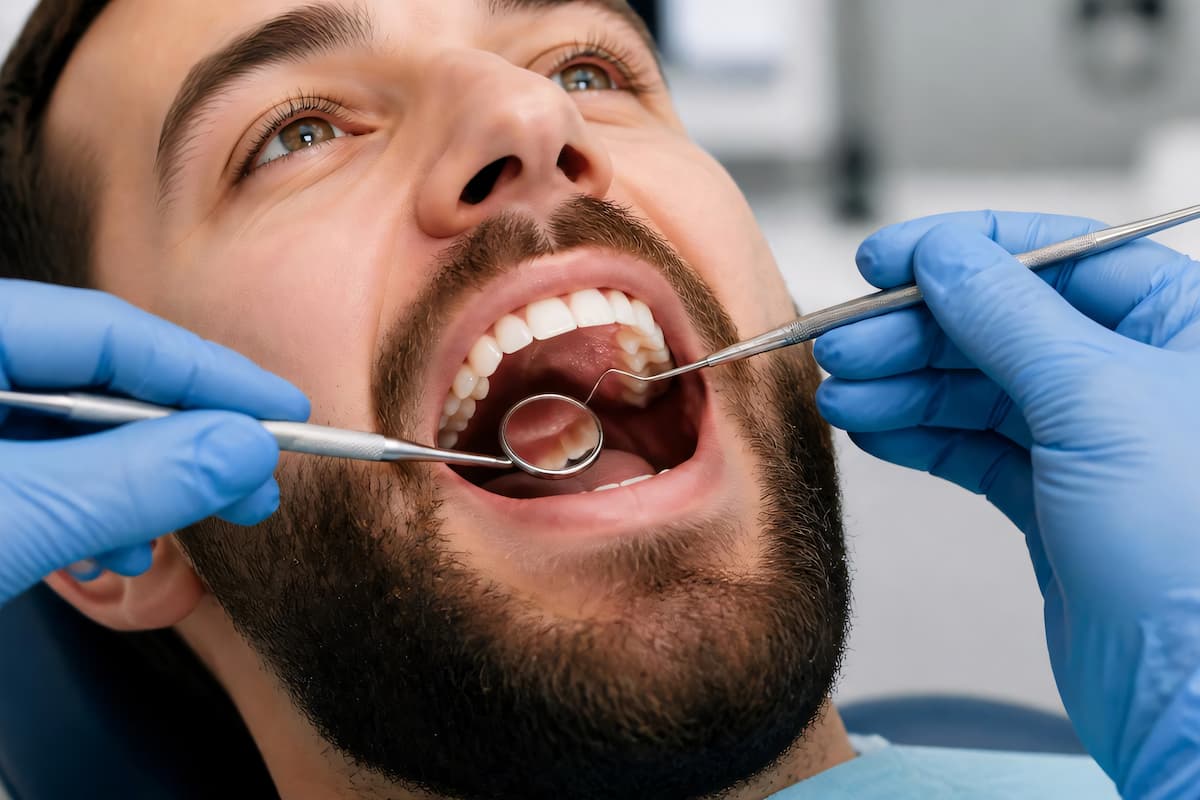
When a person presents to a dental professional with possible jaw, bite or TMJ concerns, the assessment may include:
- A detailed symptom history — including when symptoms occur, what triggers them and how they have changed over time
- Assessment of jaw movement — including the range of opening and any deviation or restriction
- Muscle palpation — gentle examination of the jaw and facial muscles for tenderness or tightness
- Examination of the teeth and bite — including checking for signs of wear, grinding or unusual contact patterns
- Assessment of signs of clenching or grinding — such as tooth surface changes, muscle hypertrophy or other clinical indicators
- Dental examination — including the health of the teeth, gums and supporting structures
- Relevant imaging — such as dental radiographs where clinically indicated; advanced imaging is not routinely required for all presentations
The specific assessment will depend on individual findings and clinical judgement. Not every person with jaw symptoms will require the same investigation.
How Might TMJ-Related Problems Be Managed?
Where a dental professional identifies a jaw, muscle or bite-related problem, management approaches may include:
- Behavioural and lifestyle advice — such as reducing known aggravating habits and managing daytime clenching
- Jaw exercises or physiotherapy — where clinically appropriate, to support muscle function and jaw movement
- Management of bruxism — which may involve a dental appliance (such as a splint or occlusal guard) in selected cases, fitted and monitored by a dentist
- Addressing relevant dental problems — such as tooth wear or bite factors that may be contributing
- Specialist referral — where the clinical picture warrants input from a specialist in oral medicine, oral surgery or related fields
Management is individual. No single approach works for everyone, and outcomes depend on the specific underlying factors identified. Irreversible changes to the bite are not considered a routine or first-line approach to jaw-muscle or TMJ problems. A dental professional will advise based on an individual's findings.
For those seeking to understand what dental assessment for jaw-related concerns might involve, information on dental examinations and assessments is available from qualified dental providers.
How Can You Reduce the Risk of Jaw Strain?
While it is not always possible to prevent jaw tension entirely — particularly where it occurs during sleep — the following general measures may help reduce the likelihood of strain:
- Avoid unnecessary daytime clenching — make a conscious effort to keep the teeth slightly apart and the jaw relaxed during the day
- Avoid prolonged gum chewing — repeated jaw movement for extended periods can fatigue jaw muscles
- Manage stress appropriately — stress is a recognised factor associated with jaw clenching and bruxism; relaxation techniques, exercise and appropriate support may help
- Maintain healthy sleep habits — poor sleep quality is associated with both bruxism and headaches
- Seek dental assessment for persistent jaw symptoms rather than attempting self-management indefinitely
- Address suspected grinding professionally — where bruxism is identified or suspected, a dental assessment can guide appropriate management
- Maintain regular dental care — routine dental check-ups allow a dentist to monitor for early signs of tooth wear or jaw changes
These measures cannot prevent migraine, which is a neurological condition with its own management pathway.
When Might a Dental Assessment Be Appropriate?
If recurring jaw discomfort, tooth wear, bite changes or suspected grinding appear to be contributing to symptoms, a dental assessment may help determine whether there is an identifiable oral or jaw-related factor. A qualified dental practice can assess the teeth, bite and jaw function, and advise whether further investigation or management is appropriate.
Wimpole Dental is a private dental practice that provides dental assessments and relevant dental services. If you are concerned about jaw pain, teeth grinding, tooth wear or related dental concerns, the practice can provide information about temporomandibular disorders and related dental care. Fees, treatment suitability and appointment availability should be confirmed directly with Wimpole Dental.
Frequently Asked Questions
Can TMJ cause morning headaches?
TMJ disorders can be associated with pain around the jaw, face and temples, and jaw-muscle tension may contribute to head discomfort in some individuals on waking. However, morning headaches have many possible causes, and a dental or medical assessment is needed to determine whether the TMJ is genuinely involved in any particular case.
Can teeth grinding cause headaches when you wake up?
Sleep bruxism — involuntary teeth grinding during sleep — can lead to jaw-muscle fatigue, facial soreness and temple discomfort that is most noticeable in the morning. This may be experienced as a form of head or facial pain. However, not everyone who grinds their teeth experiences morning headaches, and assessment is needed to establish the cause.
Is TMJ the same as a migraine?
No. TMJ refers to the temporomandibular joint, and TMD refers to disorders affecting the jaw joint and surrounding muscles. Migraine is a distinct neurological condition characterised by recurrent head pain and often accompanied by nausea or sensitivity to light and sound. The two conditions are separate, though their symptoms can sometimes overlap around the temple and head region.
Can jaw alignment affect headaches?
Changes in how the teeth meet or how the jaw functions may influence jaw-muscle loading in some individuals, which could in turn contribute to muscle-related discomfort. However, jaw position alone is not a sufficient diagnosis, and headache cannot automatically be attributed to bite or occlusal factors without thorough clinical assessment. The evidence is not straightforward.
Should I see a dentist or a GP for jaw-related headaches?
It depends on the nature of the symptoms. If jaw pain, clicking, stiffness or suspected grinding is prominent, a dental assessment may be appropriate. If headaches are the primary concern — particularly if they are new, changing, severe or meet characteristics of migraine — consulting a GP is the appropriate starting point. Both dental and medical assessment may be relevant in some situations.
Can a night guard help with jaw-related headaches?
A dental appliance such as an occlusal splint or night guard may be recommended by a dentist in selected cases where bruxism or jaw clenching is identified as a contributing factor. However, a night guard should be professionally assessed and fitted — off-the-shelf devices are not a substitute for clinical evaluation. Such appliances are not a treatment for migraine and do not address all possible causes of morning headaches.
Medical Disclaimer
This article is for general educational information only and is not a diagnosis or treatment recommendation. Always consult a qualified professional for personal advice.
Written Date: 9 October 2026 | Next Review Date: 9 October 2027