South Kensington Tube.


Introduction
Many people feel a little uncertain before attending a dental appointment — especially if it has been a while since their last visit, or if they are simply unsure what a check-up actually involves. Questions such as "What will the dentist actually do?" or "Will anything be painful?" are entirely understandable, and knowing what to expect can make the experience feel far less daunting.
A routine dental check-up is one of the most important steps a person can take in maintaining their long-term oral health. It is not just about checking for cavities. A thorough examination allows a dentist to assess the overall condition of the teeth, gums, and surrounding tissues, identify any early signs of concern, and provide tailored advice to help patients look after their oral health between appointments.
This article explains, step by step, what typically happens during a routine dental check-up — from the moment you sit in the chair to the advice you receive before you leave.
What Is a Routine Dental Check-Up?
A routine dental check-up is a comprehensive oral health assessment carried out by a dentist, typically recommended at regular intervals determined by your individual dental needs. It involves examining the teeth, gums, soft tissues, and bite to identify any concerns early, support preventive care, and provide personalised oral health guidance.
The frequency of check-ups is not one-size-fits-all. Some patients benefit from attending every six months, whilst others with excellent oral health and a low risk of dental problems may be advised to attend less frequently. Your dentist will recommend an appropriate recall interval based on your circumstances.
Step by Step: What to Expect During a Dental Check-Up
Step 1 — Medical and Dental History Review
Before the clinical examination begins, your dentist will typically review your medical and dental history. This is an important part of the process that is sometimes overlooked by patients.
Changes to your general health, medications, or lifestyle since your last appointment can all have implications for your oral health and for the dental treatments that may be appropriate for you. For example, certain medications can affect saliva production or gum health, and some medical conditions have oral health implications.
If you are attending a practice for the first time, this stage may take a little longer, as the dentist will need to build a complete picture of your health background.
Step 2 — Examination of the Teeth
The dentist will systematically examine each tooth, assessing its condition. During this part of the check-up, they will be looking for:
- Signs of tooth decay (dental caries)
- Worn, chipped, cracked or fractured teeth
- Existing fillings, crowns or other restorations that may require attention
- Changes to tooth colour or structure
- Evidence of tooth grinding or clenching (bruxism)
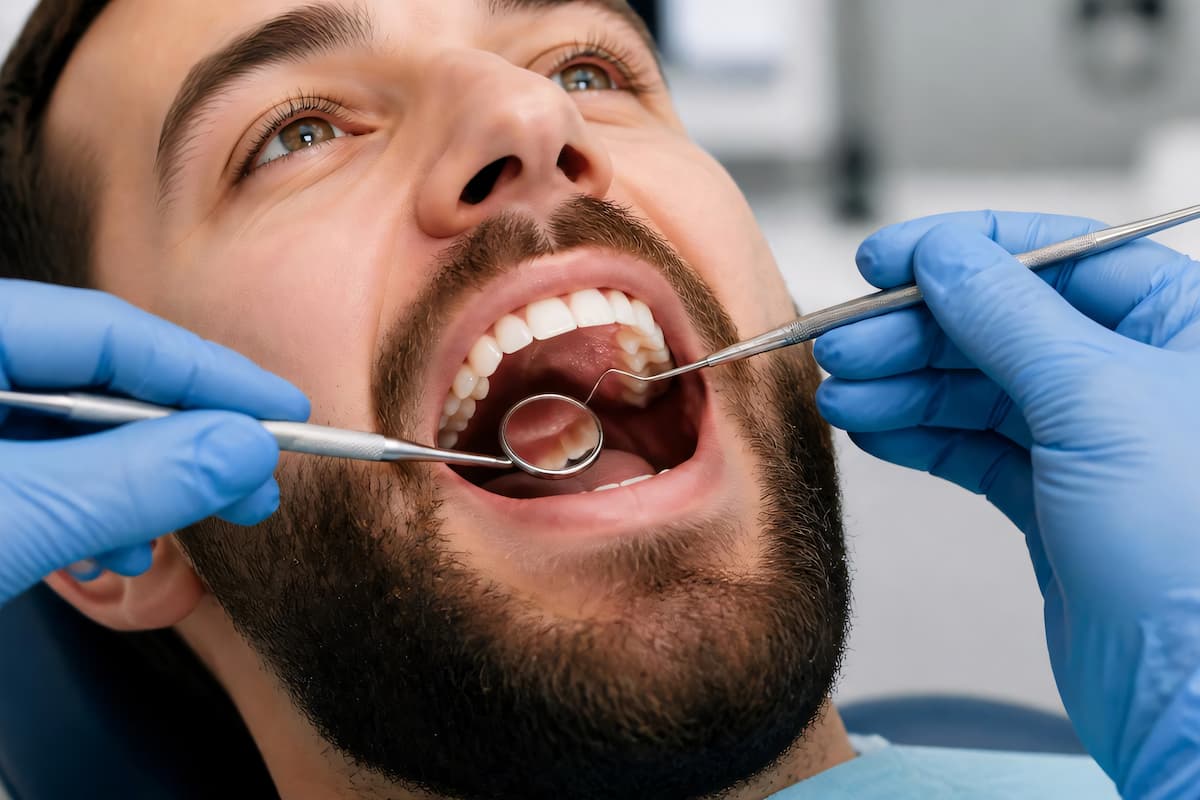
A small dental mirror and probe are commonly used to help the dentist access and assess areas of the mouth that are difficult to see directly. This is generally a comfortable process, though some areas of the mouth may be more sensitive than others.
Step 3 — Gum and Periodontal Assessment
Gum health is an integral part of a full dental check-up. The dentist — or in some practices, a dental hygienist — will assess the condition of the gums and the supporting structures around the teeth, collectively known as the periodontium.
A periodontal assessment typically involves using a small probe to gently measure the depth of the spaces between the teeth and gums (known as periodontal pockets). Healthy gum tissue sits close to the tooth surface. Deeper pockets can indicate the presence of gum disease (periodontitis), which, if left unaddressed, may affect the supporting bone around the teeth over time.
Signs of gum inflammation, bleeding on probing, or recession may all be noted and recorded as part of this process. Where gum concerns are identified, gum disease condition assessment and treatment options may be discussed as part of an ongoing care plan.
Step 4 — Soft Tissue Examination
A responsible check-up also includes an examination of the soft tissues inside the mouth — including the tongue, cheeks, floor of the mouth, roof of the mouth, and lips. This assessment is important because it can help identify changes to the oral mucosa that may warrant further investigation.
Oral cancer screening is a recognised part of a routine dental examination in the UK. The dentist is looking for any unusual patches, lumps, ulcers, or changes in the soft tissue that persist beyond a reasonable period. Identifying concerning changes early is clinically important, which is why attending regular check-ups is genuinely worthwhile.
Step 5 — Dental X-Rays (Where Clinically Appropriate)
Dental X-rays are not taken at every appointment, but they are an important diagnostic tool when clinically indicated. They allow the dentist to see areas that cannot be examined visually, such as:
- Decay developing between the teeth
- The condition of tooth roots
- Bone levels around the teeth
- The position of developing or unerupted teeth
- Conditions affecting the jaw
The dentist will only recommend X-rays when there is a clinical justification for doing so. Dental X-rays use very low doses of radiation, and modern digital systems reduce exposure further still.
Step 6 — Bite and Jaw Assessment
The relationship between the upper and lower teeth — known as the occlusion or bite — can have a significant effect on dental health. The dentist may assess how the teeth come together and whether there is any evidence of jaw joint (TMJ) problems, muscle tenderness, or unusual wear patterns that could suggest an issue with the bite.
Step 7 — Professional Cleaning (Scale and Polish)
In many practices, a dental hygienist will carry out a professional clean as part of or alongside the routine check-up. This involves removing plaque and calculus (hardened tartar) from the tooth surfaces — particularly in areas that may be difficult to clean thoroughly at home, such as along the gumline and between the teeth.
Maintaining good oral hygiene at home is important, but professional cleaning helps address the accumulation of deposits that ordinary brushing and flossing cannot fully remove.
Step 8 — Personalised Oral Health Advice
At the end of the appointment, your dentist or hygienist will typically provide tailored advice on maintaining your oral health. This may include guidance on brushing technique, the use of interdental cleaning aids, dietary considerations, or the use of fluoride products.
If any concerns have been identified, the dentist will explain their findings, discuss the available options, and recommend an appropriate course of action — which may include further investigation, monitoring, or treatment.
The Dental Science Behind a Check-Up
Understanding why certain parts of the examination matter can help patients appreciate the value of attending regularly.
Tooth decay (dental caries) develops when bacteria in the mouth produce acids that gradually dissolve the hard outer layer of the tooth (enamel). Over time, if unchecked, decay can progress through the enamel into the softer dentine beneath, and eventually reach the dental pulp — the innermost part of the tooth containing nerves and blood vessels. Early-stage decay identified during a check-up is generally far more straightforward to address than decay that has progressed significantly.
Similarly, gum disease progresses in stages. Early gum inflammation (gingivitis) affects only the soft tissue and is generally reversible with good oral hygiene and professional care. If gingivitis is left unaddressed, it can develop into periodontitis, which affects the supporting bone and connective tissue around the teeth. Regular examination means that gum changes can be identified and managed early.
Where patients experience significant tooth wear or structural damage, a dentist can discuss restorative options. In some cases, dental crown treatment for worn, broken, or root-treated teeth may be considered to help restore the shape and function of heavily worn or damaged teeth, depending on clinical assessment.
When Should You Speak to a Dental Professional?
A routine check-up is appropriate for all adults, regardless of whether they have any current symptoms. However, certain situations may warrant a more prompt dental appointment between routine visits:
- Toothache or persistent dental pain — pain that does not resolve should be assessed by a dentist
- Swollen or bleeding gums that are new or worsening
- Sensitivity to hot, cold, or sweet foods that is new, severe, or persistent
- A broken, chipped or loose tooth
- A lost or damaged filling or crown
- A mouth ulcer that has not healed after three weeks
- Difficulty chewing or biting
- Unusual lumps, swellings or patches in the mouth
If you are in dental pain that requires urgent attention, an emergency dental assessment may be needed. For patients in London seeking timely assessment of dental pain or trauma, information about same-day emergency dentist treatment for urgent tooth pain or trauma is available as a reference resource.
Preventive Oral Health Advice
Good oral health between appointments plays an important role in supporting the outcomes of routine dental care:
- Brush twice daily using a fluoride toothpaste, including last thing at night
- Clean between your teeth daily using floss, interdental brushes, or a water flosser
- Limit frequent consumption of sugary and acidic foods and drinks
- Stay hydrated — saliva plays a protective role in oral health
- Avoid smoking, which is associated with gum disease and oral cancer risk
- Wear a mouthguard if you participate in contact sports
- Attend regular dental examinations at the interval recommended by your dentist
Patients interested in exploring preventive dental care further may find it helpful to read about general dentistry treatment options including routine exams and preventive care approaches available at specialist dental clinics.
Key Points to Remember
- A routine dental check-up involves much more than simply checking for cavities — it is a comprehensive oral health assessment
- The examination typically includes the teeth, gums, soft tissues, bite, and where appropriate, dental X-rays
- Gum health and soft tissue screening (including oral cancer screening) are important components of a thorough check-up
- The frequency of check-ups is determined individually and is not necessarily every six months for everyone
- Early identification of dental concerns generally makes management simpler and more straightforward
- Good oral hygiene at home supports — but does not replace — the benefits of regular professional dental assessment
Frequently Asked Questions
How often should I have a routine dental check-up?
The appropriate interval between check-ups varies from person to person. Your dentist will recommend a recall period based on your individual risk factors, oral health history, and current dental condition. Some people may benefit from six-monthly appointments, whilst others with stable oral health and low risk may be advised to attend less frequently. Following your dentist's recommended schedule is generally the most sensible approach for your circumstances.
Does a dental check-up hurt?
For most people, a routine dental check-up is comfortable. The examination itself — using a mirror and probe — is generally painless, though some areas of the mouth may feel more sensitive, particularly if gum inflammation is present. Professional cleaning can occasionally cause brief discomfort in areas of sensitivity or where significant tartar has built up. If you experience pain during any part of an examination, it is always appropriate to let your dentist know so they can adjust their approach.
What is the difference between a dental check-up and a dental hygienist appointment?
A dental check-up is carried out by a dentist and focuses on assessing the overall condition of the teeth, gums, and oral tissues. A hygienist appointment typically focuses on professional cleaning, gum health education, and personalised oral hygiene advice. In many practices, these appointments may be combined or run alongside one another. Your dental practice can explain how their appointment structure works.
Will I need X-rays at every check-up?
No. Dental X-rays are only taken when there is a clinical reason to do so. The dentist will assess whether X-rays are appropriate based on your dental history, risk factors, and the findings of the clinical examination. X-rays are a valuable diagnostic tool, but they are not routinely taken at every appointment as a matter of course.
Can a dental check-up detect oral cancer?
A thorough dental examination includes a soft tissue assessment that may help identify unusual changes in the mouth that could warrant further investigation. This includes examination of the tongue, cheeks, gums, floor of the mouth, and lips. Detecting changes early is clinically important. However, a dental examination is not a formal diagnostic procedure for oral cancer — if a dentist identifies anything of concern, they will refer the patient appropriately for further assessment.
What happens if a problem is found during my check-up?
If the dentist identifies a concern — such as a cavity, early gum disease, or a worn restoration — they will explain their findings clearly and discuss the options available to you. In some cases, monitoring may be appropriate. In others, treatment may be recommended. The dentist will take your preferences and circumstances into account when discussing next steps. You will never be pressured into making immediate decisions. Patients interested in understanding what cosmetic or restorative options might be available can explore further options with their dental professional as part of an individual treatment plan.
Conclusion
A routine dental check-up is a structured, step-by-step process that covers far more than a quick glance at your teeth. From reviewing your medical history and examining each tooth, to assessing gum health, screening soft tissues, and providing personalised oral health advice, a thorough check-up provides a comprehensive picture of your oral health at a given point in time.
Attending regularly — at the interval recommended by your dentist — supports early identification of any concerns, when they are generally more straightforward to manage. Dental symptoms and treatment options should always be assessed individually during a clinical examination.
If you have not attended a dental check-up recently, or if you have concerns about your oral health, speaking to a dentist is always a sensible first step.
Disclaimer: This article is intended for general educational purposes only and does not constitute personalised dental advice. Individual diagnosis and treatment recommendations require a clinical examination by a qualified dental professional.
Written Date: 18 September 2026 Next Review Date: 18 September 2027